
BJJ
Chokes
The complete guide to Brazilian Jiu Jitsu chokes and strangles. Master 18 essential submission techniques from every position—back control, mount, side control, guard, and front headlock.
The Soul of
Jiu Jitsu
As John Danaher says, “submissions are the soul of Jiu Jitsu”—and chokes are the ultimate submission. Unlike joint locks, there’s no toughness that can resist a properly applied strangle. The blood stops flowing, and the fight is over.
Blood Chokes vs
Air Chokes
Not all chokes work the same way. Understanding the difference between blood strangles and tracheal chokes will help you apply them correctly—and know when to tap.
Blood Chokes
Also called: Strangles, Sleeper Holds, Carotid Restraints
Blood chokes compress the carotid arteries on the sides of the neck, cutting blood flow to the brain. They work fast (under 10 seconds), require less force, and are considered safer.
Air Chokes
Also called: Tracheal Chokes, Wind Chokes
Air chokes apply pressure to the trachea (windpipe), blocking airflow to the lungs. They’re slower (2-3 minutes), more painful, and can cause panic.
Back Control Chokes
4 techniquesThe back is the most dominant position in grappling—your opponent has no offense, only defense. These chokes are the highest percentage finishes from rear mount.
Essential
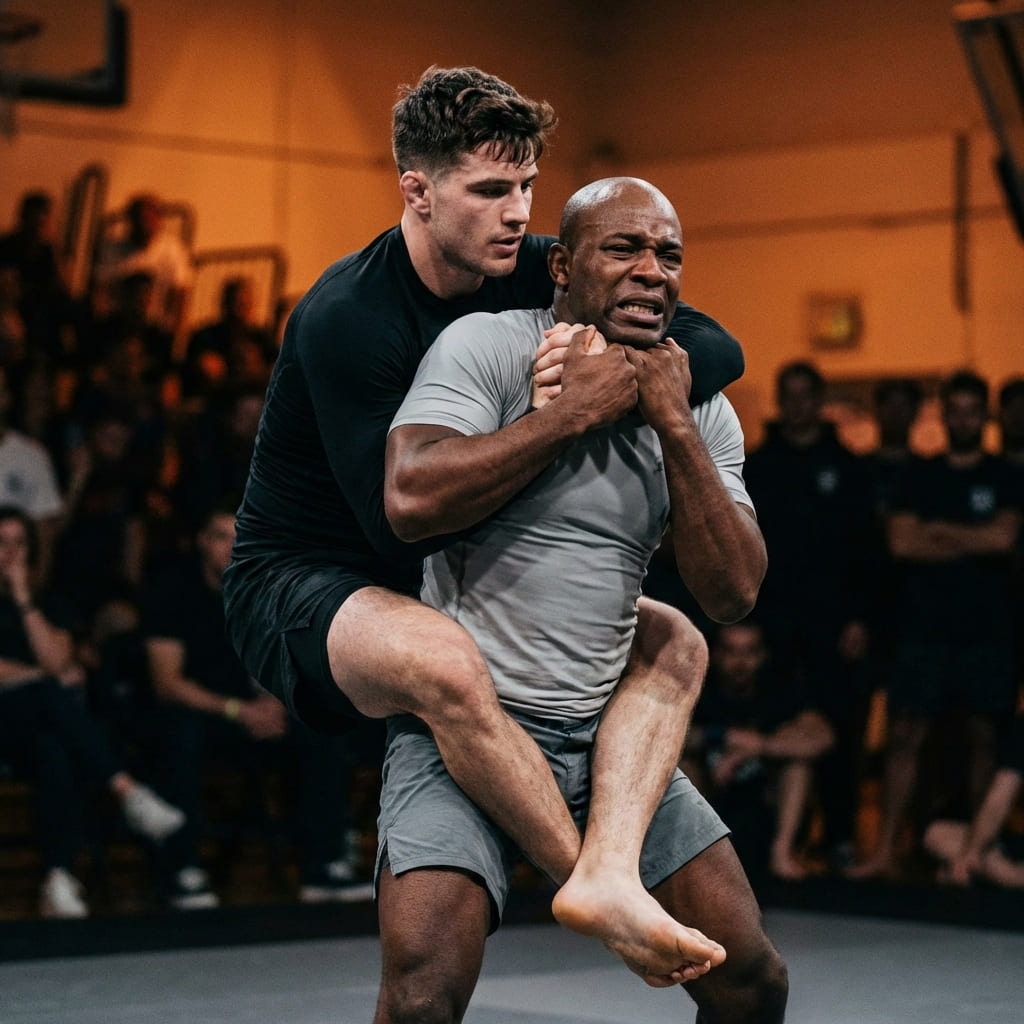
Rear Naked Choke
The king of submissions. 32% of all UFC submission wins. Once locked, there is no escape.
Learn Technique →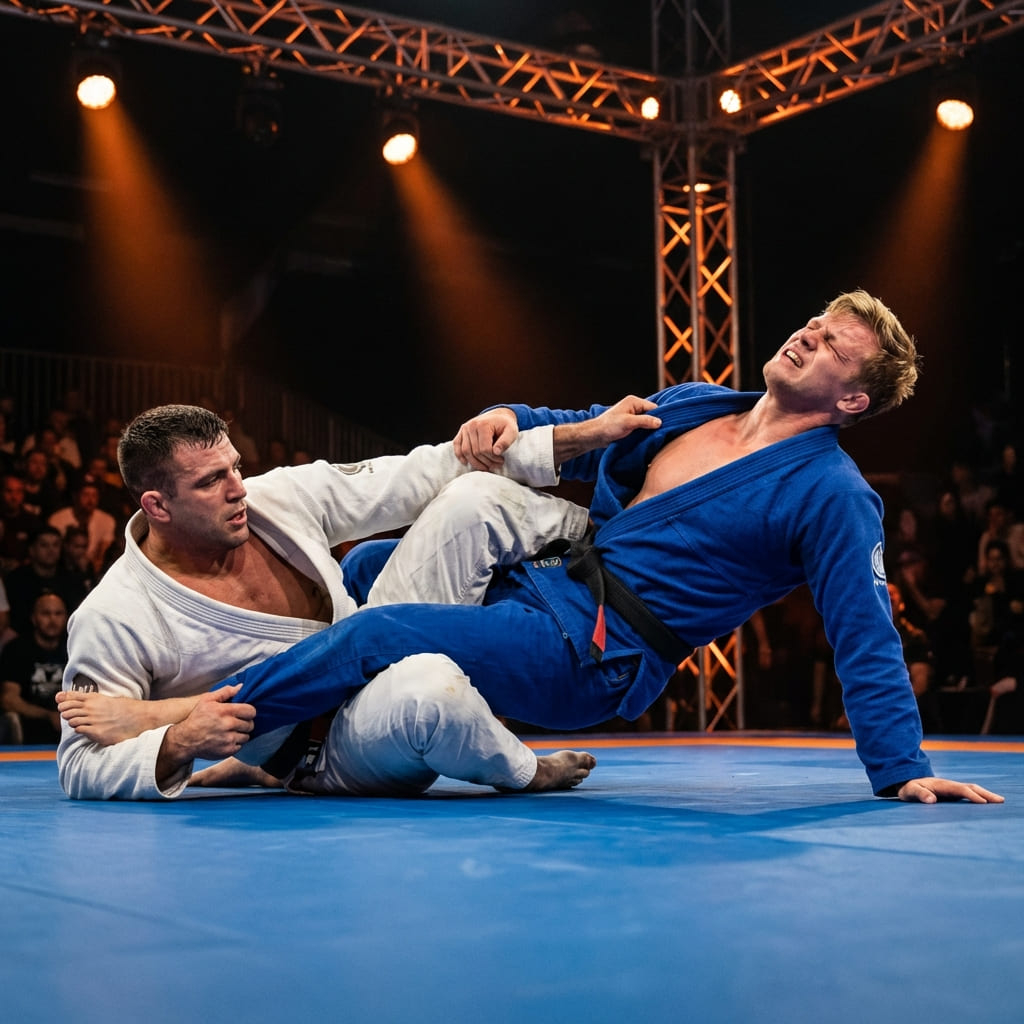 Gi Only
Bow and Arrow Choke
The most powerful gi strangle. Extend like drawing a bow—devastating pressure.
Learn Technique →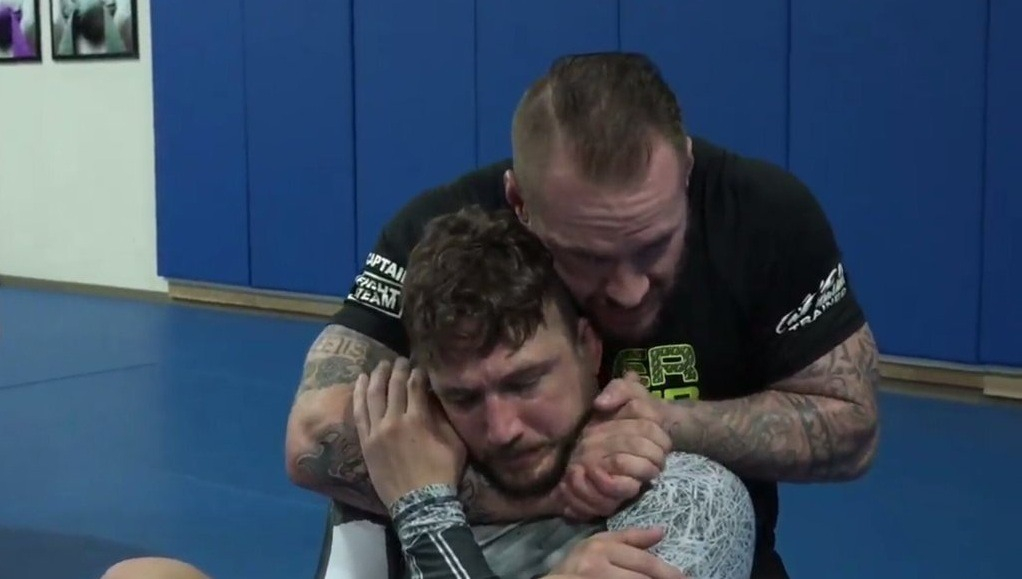 Backup
Short Choke
The RNC backup plan. Palm-to-palm, forearm across—works when fancy stuff fails.
Learn Technique →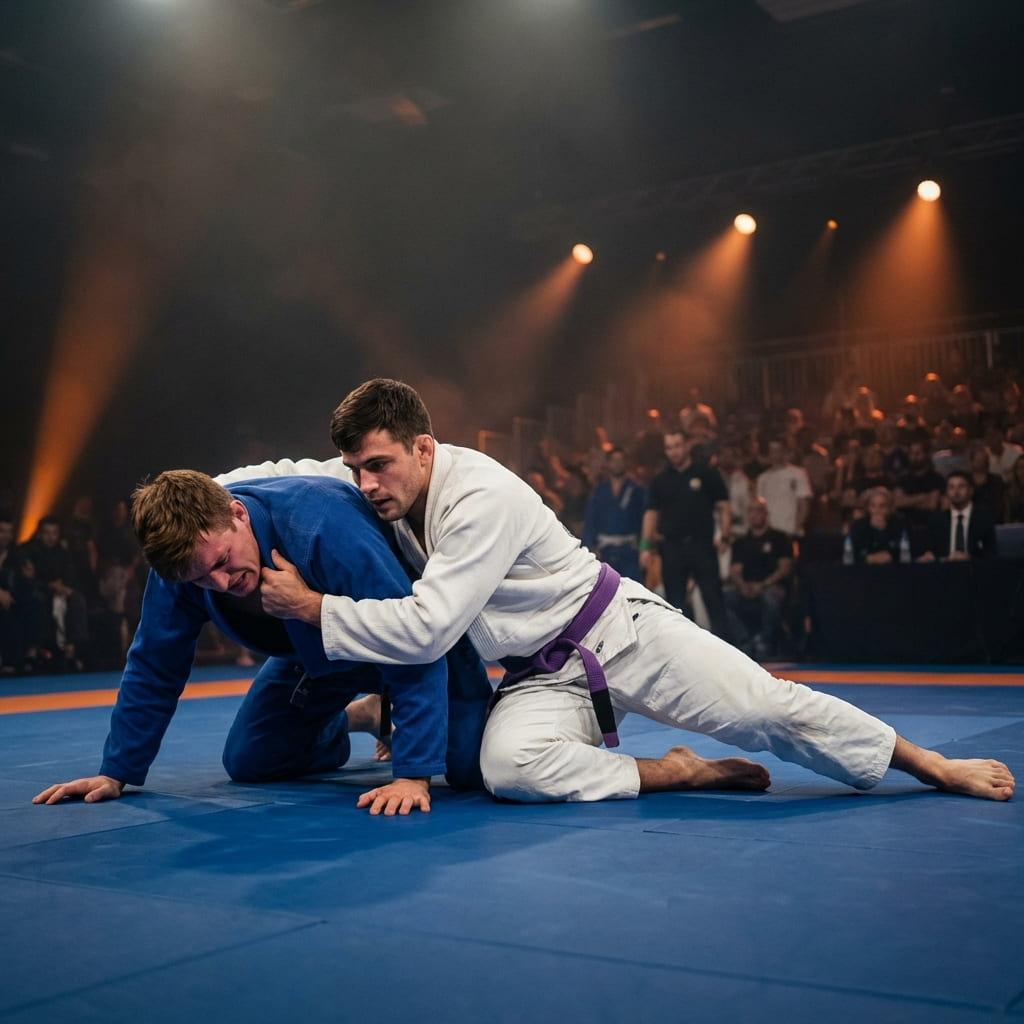 Gi Only
Clock Choke
The turtle killer. Walk around like clock hands while the collar tightens.
Learn Technique →Front Headlock Chokes
4 techniquesThe front headlock is a wrestling position that BJJ has turned into a submission paradise. These chokes attack from above when your opponent’s head is trapped.
 Essential
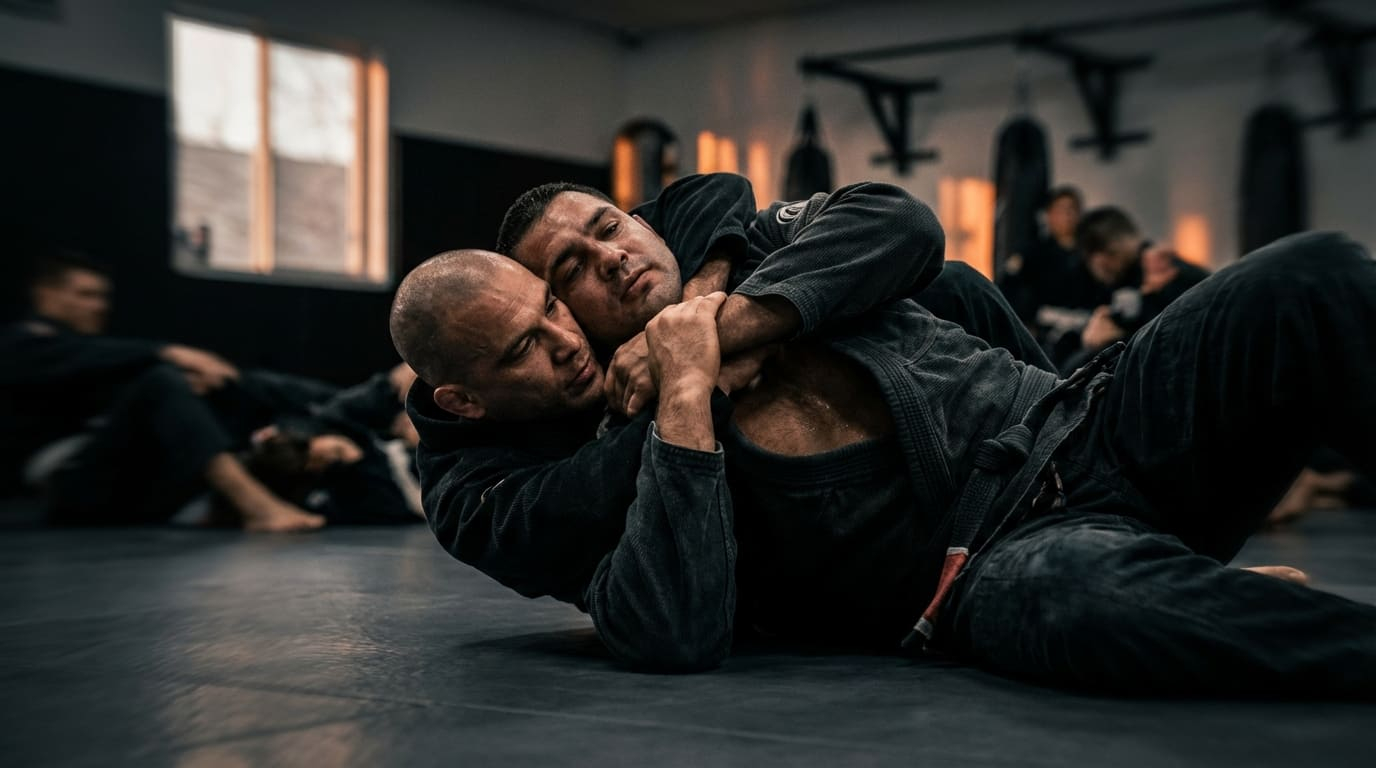
Guillotine Choke
The standing submission. Catch it on takedown attempts—arm-in or high elbow variations.
Learn Technique →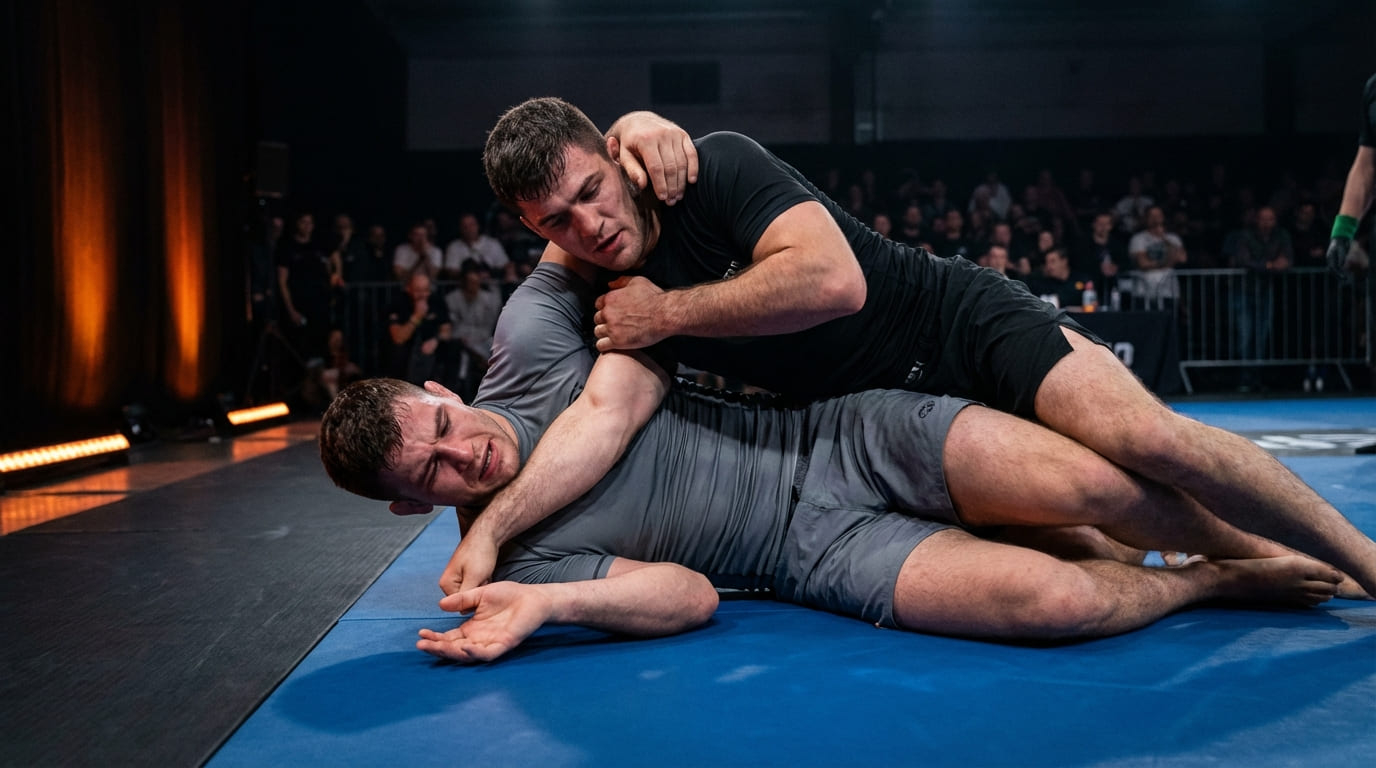
D’Arce Choke
Arm goes UNDER their armpit. The “no-gi brabo”—punishes underhooks and half guard.
Learn Technique →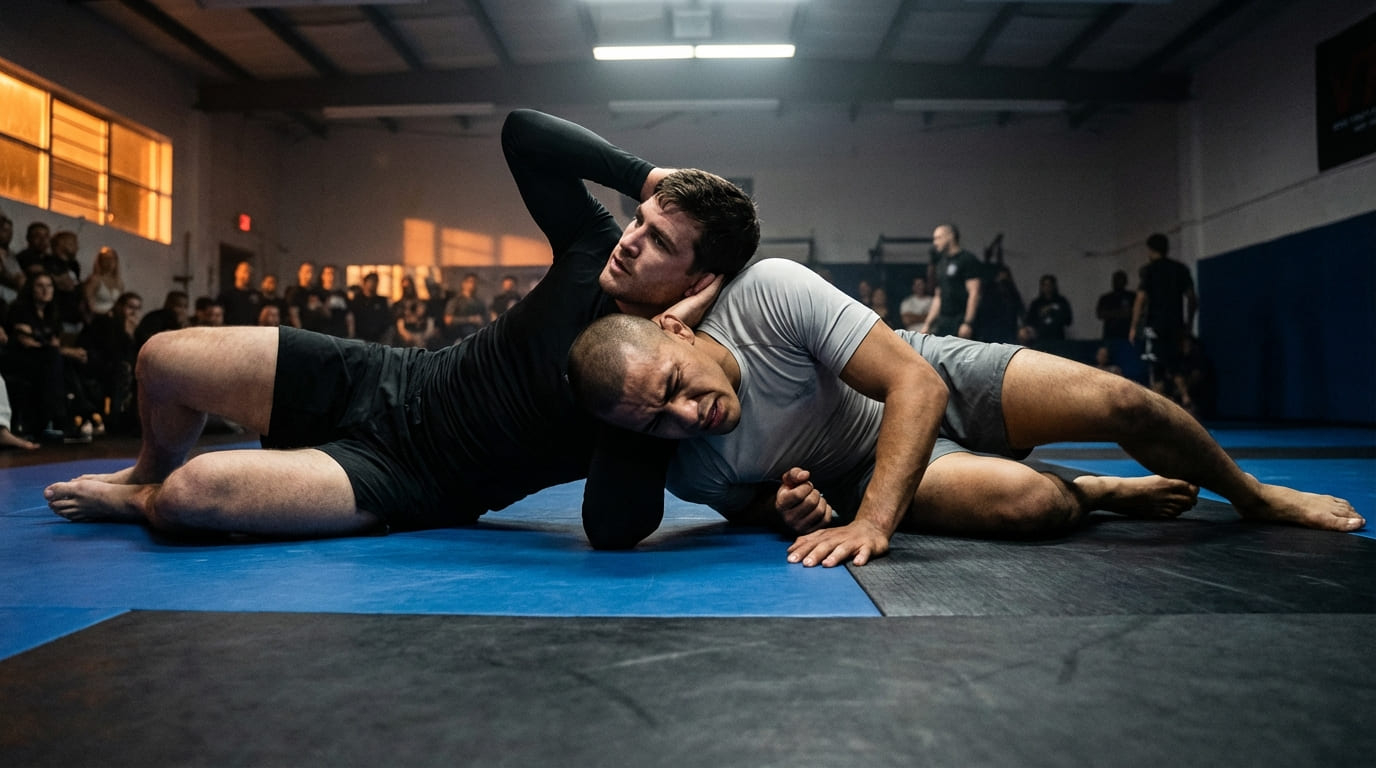
Anaconda Choke
Arm goes OVER their armpit. Roll to finish—constricts like the snake it’s named after.
Learn Technique →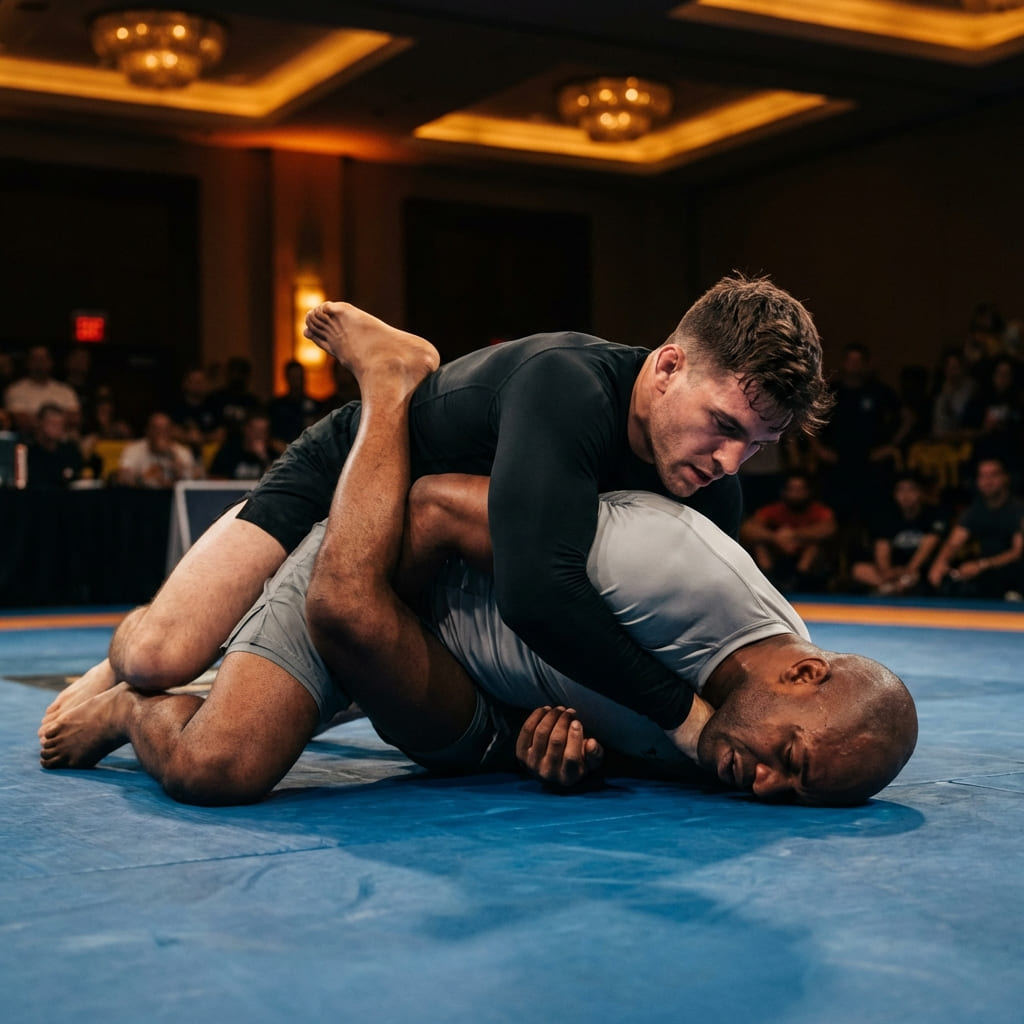
Peruvian Necktie
The ultimate turtle killer. Leg over the back, pull with everything—brutal and fast.
Learn Technique →Mount & Top Chokes
4 techniquesMount is the second most dominant position after the back. These chokes use your weight and gravity to finish—Roger Gracie made a career with just one of them.
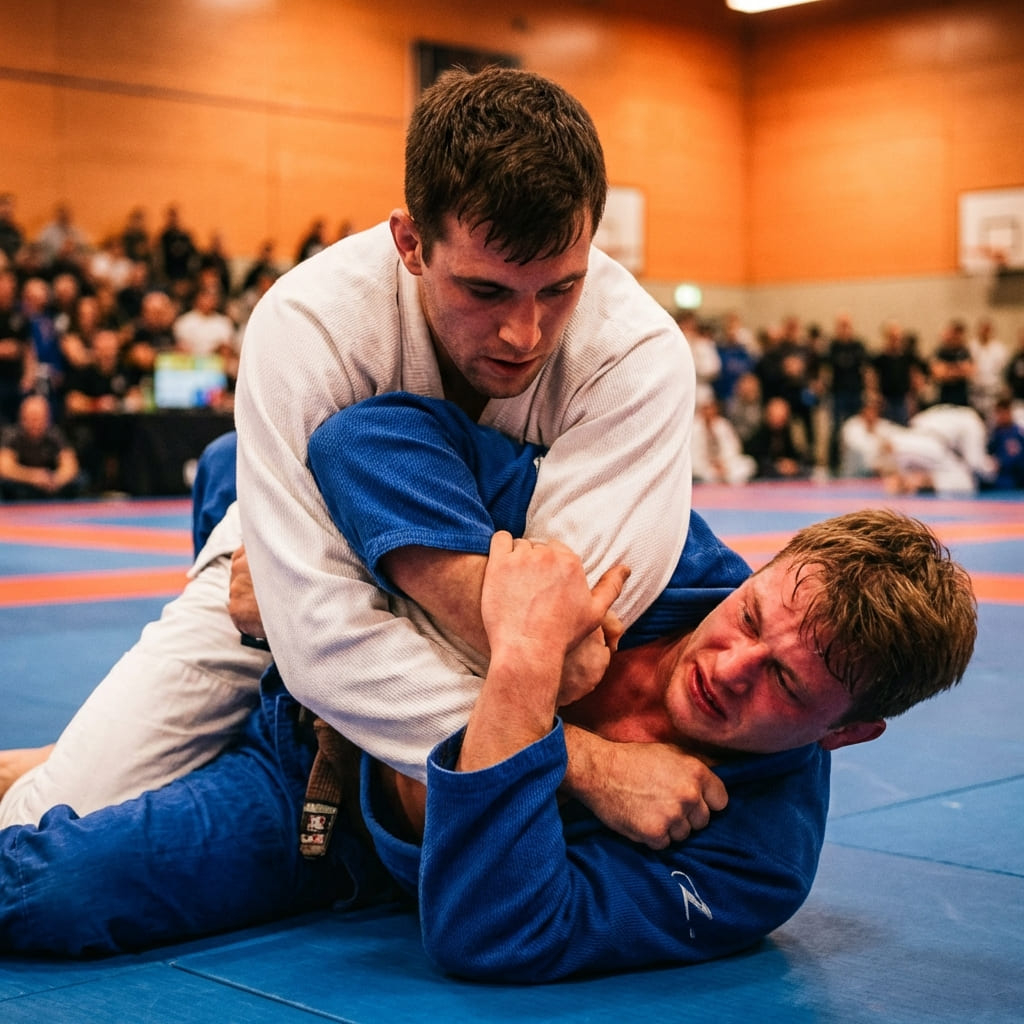 Legendary
Cross Collar Choke
The Roger Gracie special. Cross the X, go deep, elbows together. World champions sleep to this.
Learn Technique →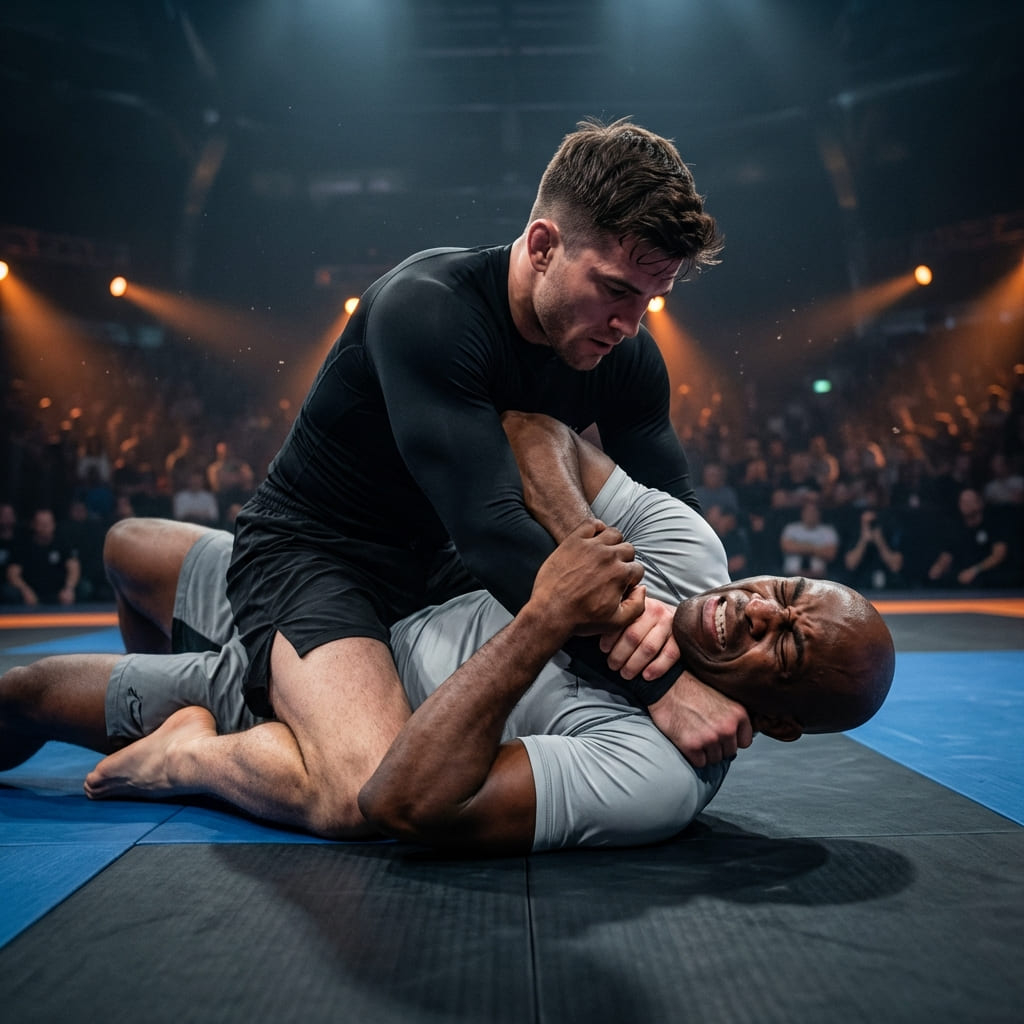
Ezekiel Choke
The sleeve choke. Works from mount, inside guard—even from bottom. 100% success rate at ADCC 2022.
Learn Technique →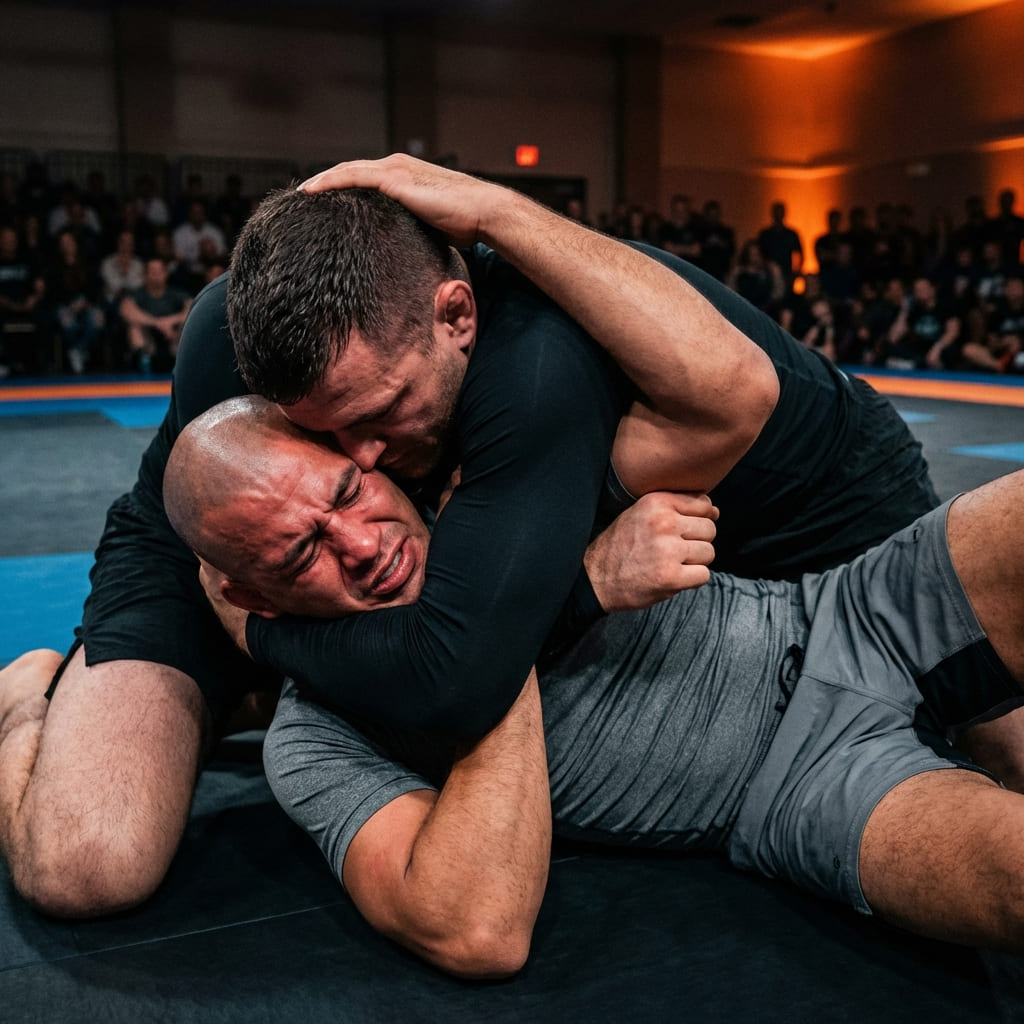 Essential
Arm Triangle Choke
Kata Gatame. Their own arm chokes them. Walk to the hip side, sprawl, squeeze. Classic.
Learn Technique →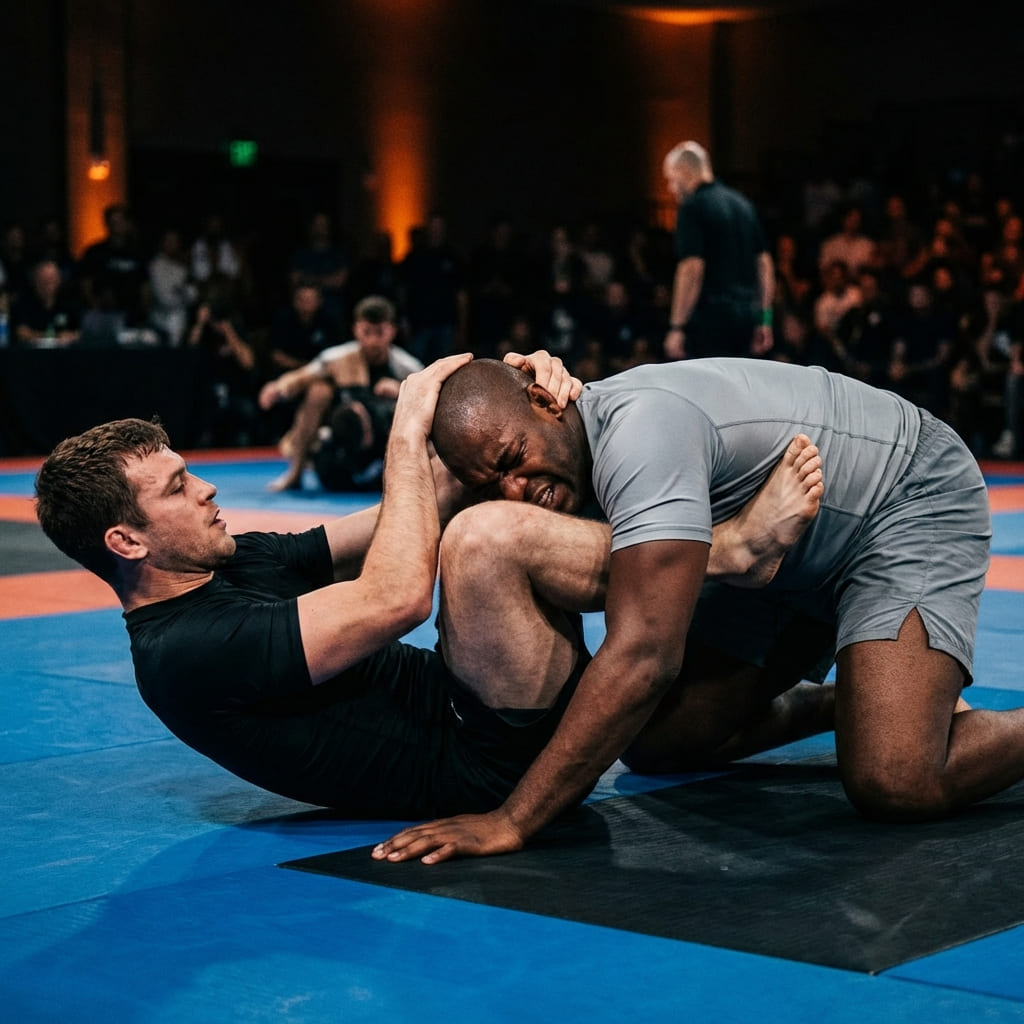 Essential
Triangle Choke
The BJJ signature move. Leg over shoulder, lock the figure-four, angle and squeeze.
Learn Technique →Side Control Chokes
6 techniquesSide control is often seen as a transitional position—but these chokes prove it’s a submission goldmine. Sneaky, unexpected, and brutally effective.
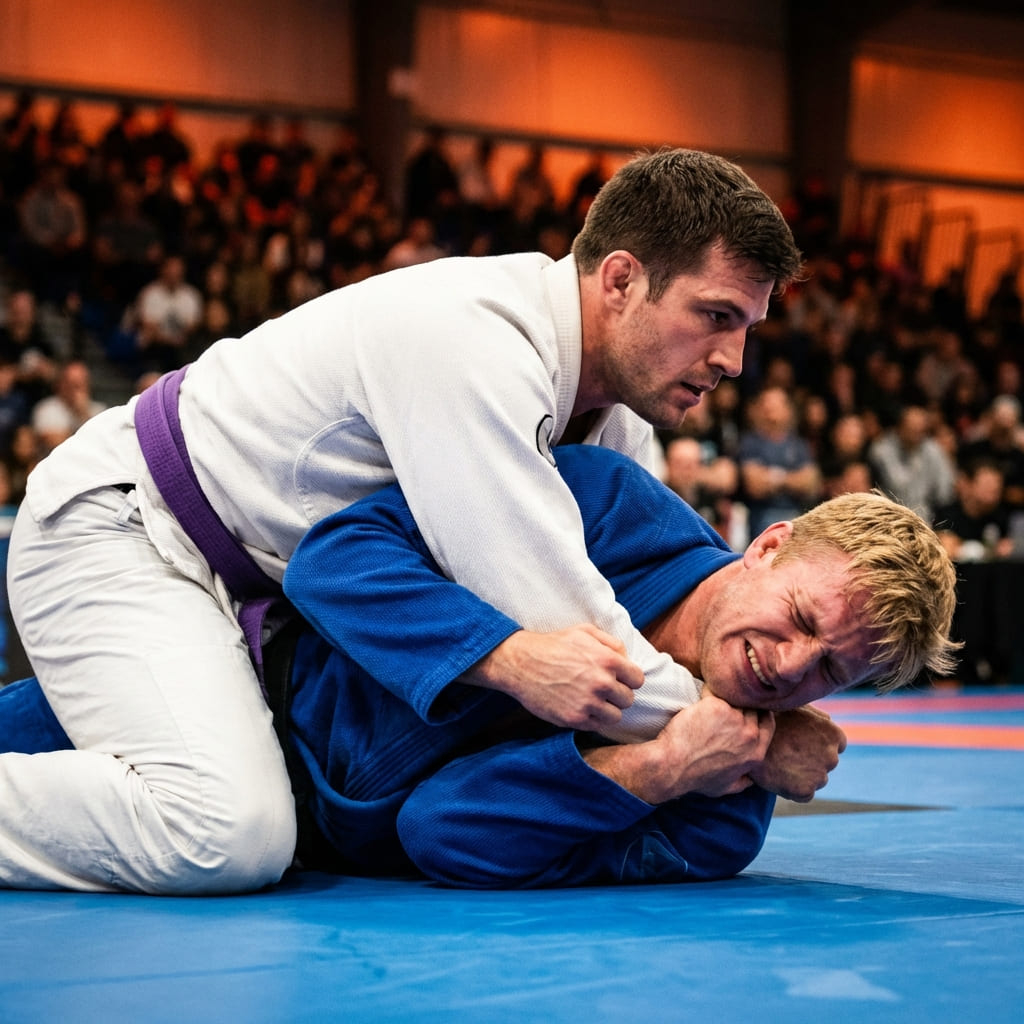
Paper Cutter Choke
Forearm cuts across throat like a blade. Drop elbow, sprawl, turn—sneaky and devastating.
Learn Technique →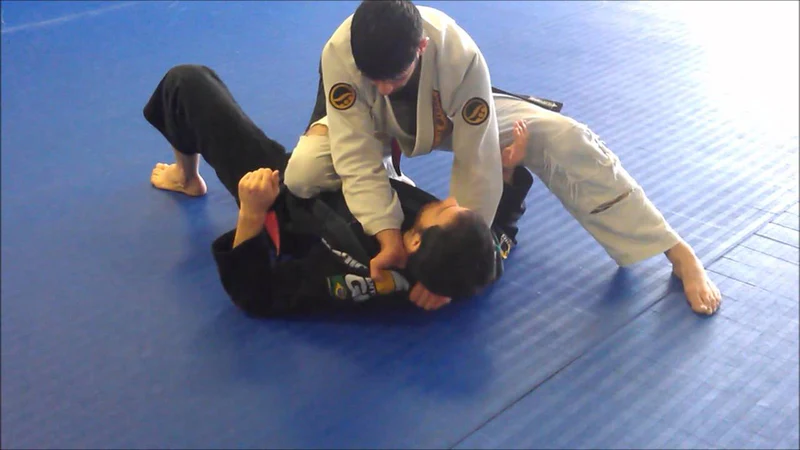
Baseball Bat Choke
Grip like a bat, scissor elbows, spin toward their head. The sneakiest collar choke.
Learn Technique →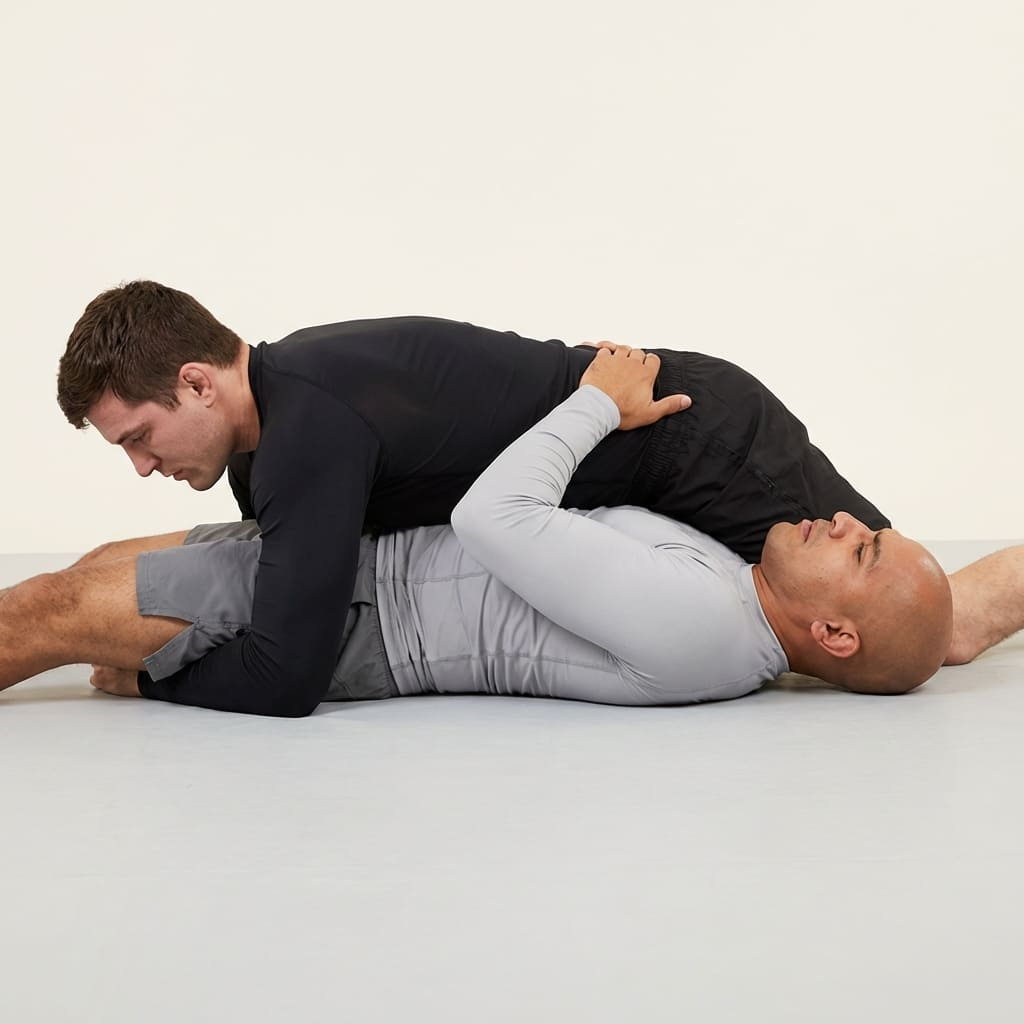
North-South Choke
Marcelo Garcia’s signature. Armpit over face, hip pressure, body weight does the work.
Learn Technique →
Von Flue Choke
The guillotine counter. They hold the guillotine, you pass, they choke themselves. Karma.
Learn Technique →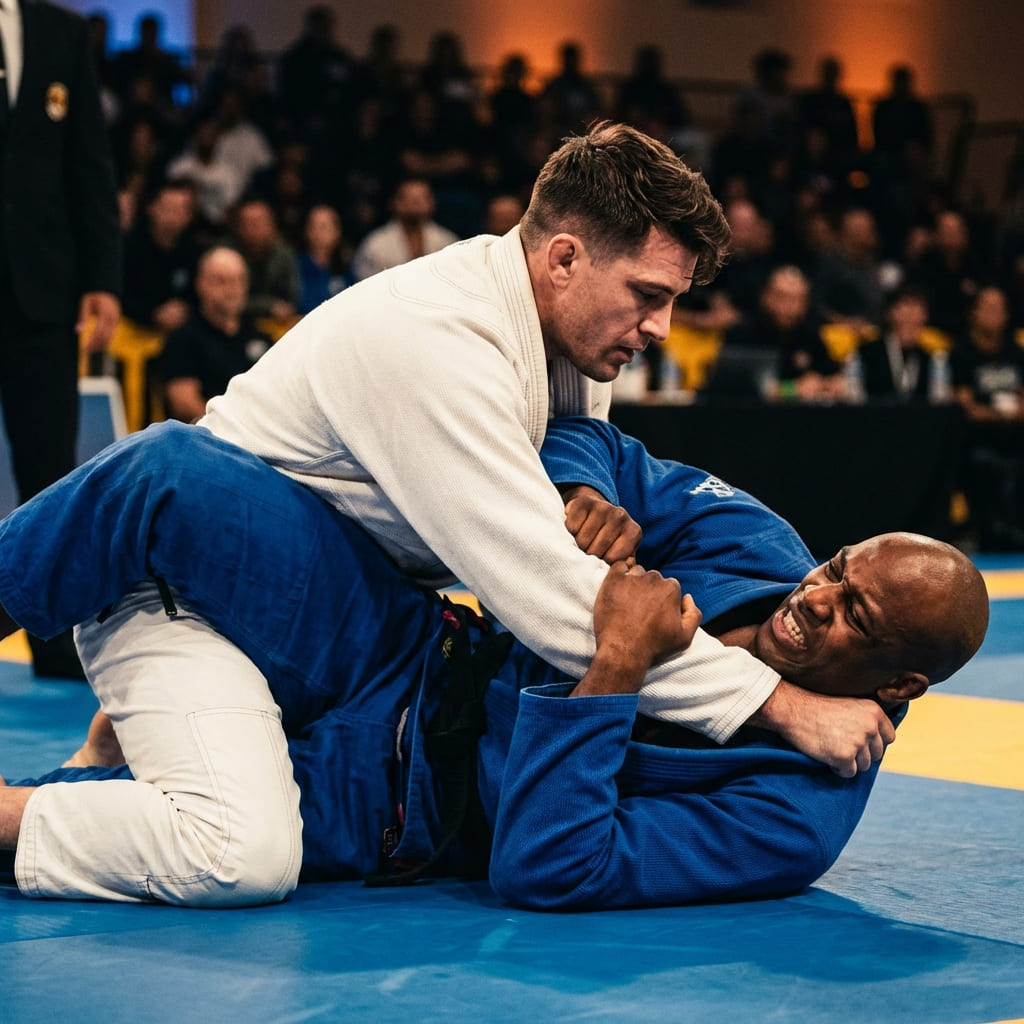 Gi Only
Brabo Choke
The gi D’Arce. Use their own lapel to strangle them. Leonardo Santos made it famous.
Learn Technique →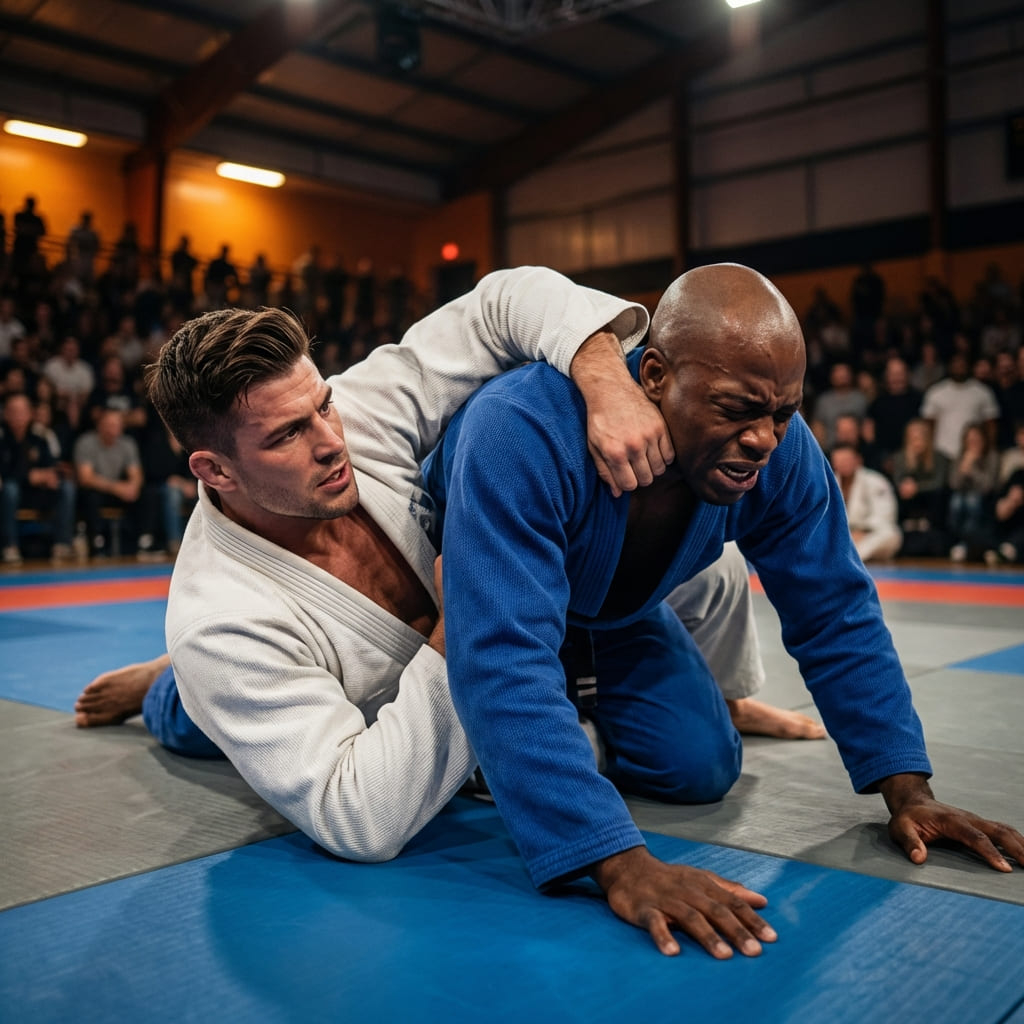 Gi Only
Loop Choke
The collar trap. Set the loop, let them pass, tighten as they move. Patience pays.
Learn Technique →“When it comes to chokes, there are no tough guys.”
Which Chokes
To Learn First
Don’t try to learn all 18 at once. Master the fundamentals first, then expand. Here’s the progression most black belts recommend.
The Fundamentals
Start here. These chokes teach the core mechanics of strangulation—blood flow, positioning, patience.
Expanding Options
Now add variations and position-specific attacks. You’ll start finishing opponents who defended the basics.
The Specialists
These situational chokes catch experienced grapplers off guard. Add them when your basics are automatic.
All 18
BJJ Chokes
The complete list of chokes and strangles covered in this guide. Click any technique to learn the full breakdown.
What Makes BJJ Chokes So Effective?
Brazilian Jiu Jitsu chokes—also known as strangles, sleeper holds, or submission chokes—are the most reliable way to end a fight. Unlike joint locks where a tough opponent might resist the pain, a properly applied choke leaves no option. The blood stops flowing to the brain, and within 8-10 seconds, consciousness fades.
This is why the Rear Naked Choke accounts for 32% of all submission victories in UFC history—more than any other technique.
Gi Chokes vs No-Gi Chokes
Some chokes require the gi (kimono) to execute—using the collar and lapels as handles for the strangle. Techniques like the Bow and Arrow Choke, Cross Collar Choke, Baseball Bat Choke, and Clock Choke are gi-specific.
Other chokes work in both gi and no-gi environments. The RNC, Triangle Choke, Guillotine, D’Arce, Anaconda, and Arm Triangle are equally effective in MMA.
Chokes From Every Position
Back Control: The most dominant position offers the highest percentage chokes—Rear Naked, Bow and Arrow, Short Choke, and Clock Choke.
Front Headlock: A wrestling position turned submission paradise—Guillotine, D’Arce, Anaconda, and Peruvian Necktie.
Mount: Weight and gravity help you finish—Cross Collar, Ezekiel, Arm Triangle, and Triangle.
Side Control: Often overlooked as a submission position—Paper Cutter, Baseball Bat, North-South, Von Flue, and Brabo.
Track Your
Choke Game
Document which chokes work for you. Log your setups, entries, and finishes. Build a submission game that’s uniquely yours.
Get The Journal